
ANNUAL REPORT
The Office of International Linkages (OIL) is a unit under the Office of the Vice President for Academic Affairs at the University of the Philippines System. It is tasked with advancing UP’s internationalization mandate by identifying, developing, and managing academic and research partnerships with higher education institutions around the world.
OIL promotes global engagement through student and faculty exchange programs, joint research collaborations, participation in academic networks, and the sharing of educational resources and activities with international partners. It also facilitates inbound and outbound mobility, administers scholarships and grants, and supports collaborative initiatives that enhance the University’s global presence and impact.
UP OIL continued to link UP to the world in Fiscal Year 2025, fulfilling its mandate to promote academic collaboration and global engagement across the University System.
This formal narrative report highlights OIL’s key accomplishments for 2025, structured around the strategic framework of People, Process, Place, and Pride.
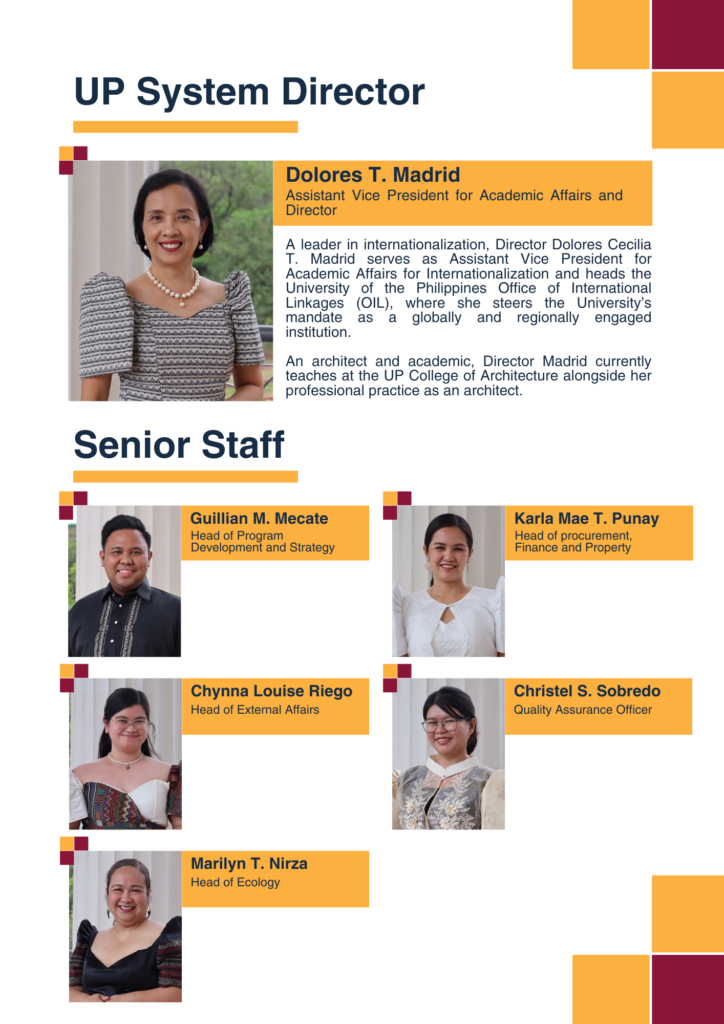
UP System Director
Dolores T. Madrid
Assistant Vice President for Academic Affairs and Director
Senior Staff
Guillian M. Mecate
Head of Program Development and Strategy
Chynna Louise Riego
Head of External Affairs
Karla Mae T. Punay
Head of Procurement, Finance and Property
Christel S. Sobredo
Quality Assurance Officer
Marilyn T. Nirza
Head of Ecology
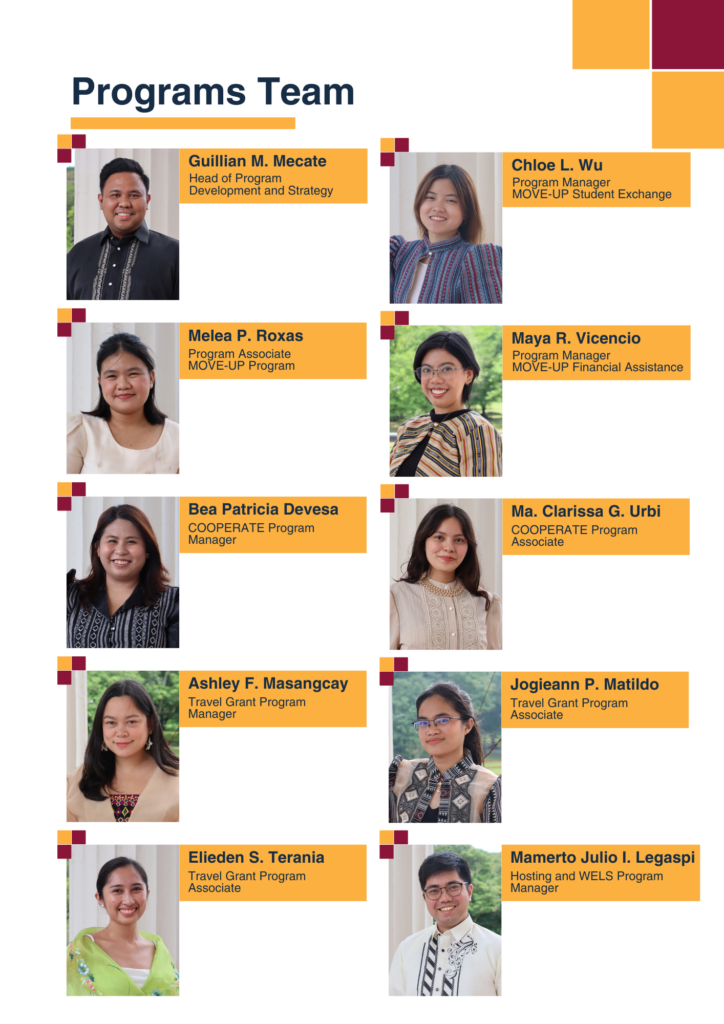
Programs Team
Maya R. Vicencio
Program Manager
MOVE-UP Financial Assistance
Melea P. Roxas
Program Associate
MOVE-UP Program
Chloe L. Wu
Program Manager
MOVE-UP Student Exchange
Bea Patricia Devesa
COOPERATE Program Manager
Ma. Clarissa G. Urbi
COOPERATE Program Associate
Ashley F. Masangcay
Travel Grant Program Manager
Elieden S. Terania
Travel Grant Program Associate
Jogieann P. Matildo
Travel Grant Program Associate
Mamerto Julio I. Legaspi
Hosting and WELS Program Manager
Guillian M. Mecate
Head of Program Development and Strategy
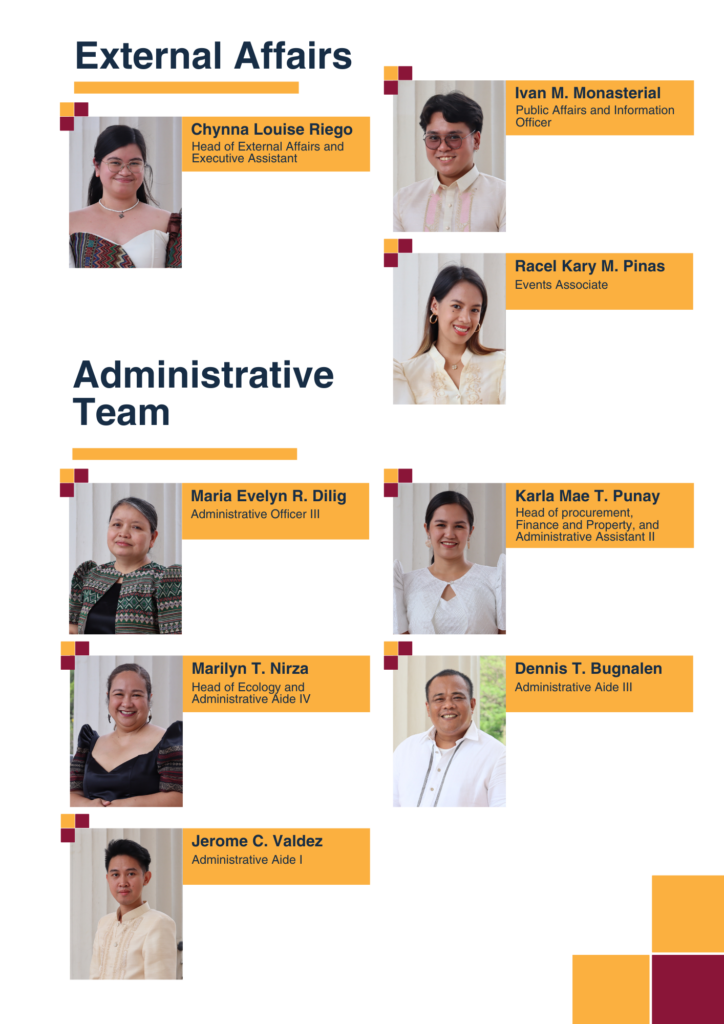
External Affairs
Chynna Louise Riego
Head of External Affairs and Executive Assistant
Racel Kary M. Pinas
Events Associate
Ivan M. Monasterial
Public Affairs and Information Officer
Administrative Team
Karla Mae T. Punay
Head of Procurement, Finance and Property, and Administrative Assistant II
Marilyn T. Nirza
Head of Ecology and Administrative Aide IV
Maria Evelyn R. Dilig
Administrative Officer III
Dennis T. Bugnalen
Administrative Aide III
Jerome C. Valdez
Administrative Aide I
Report
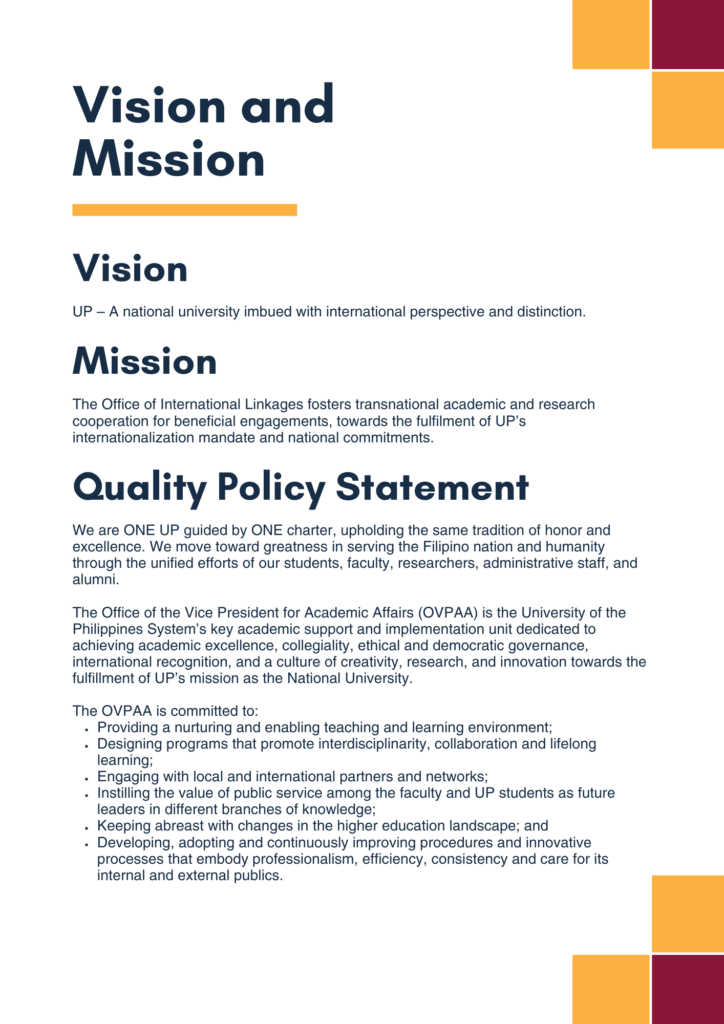
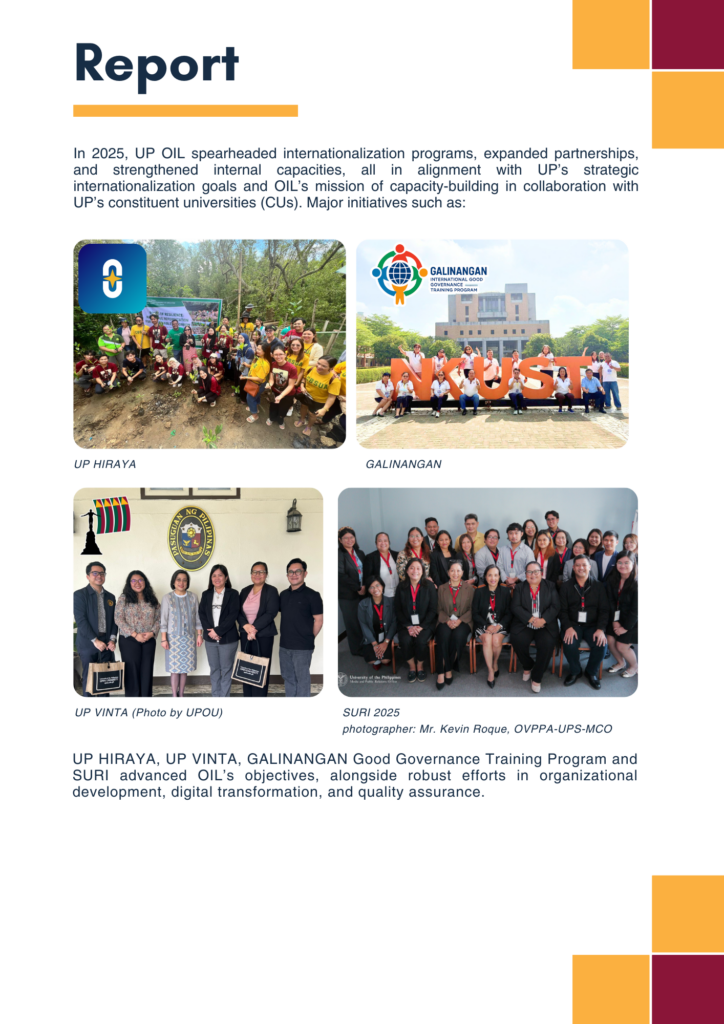
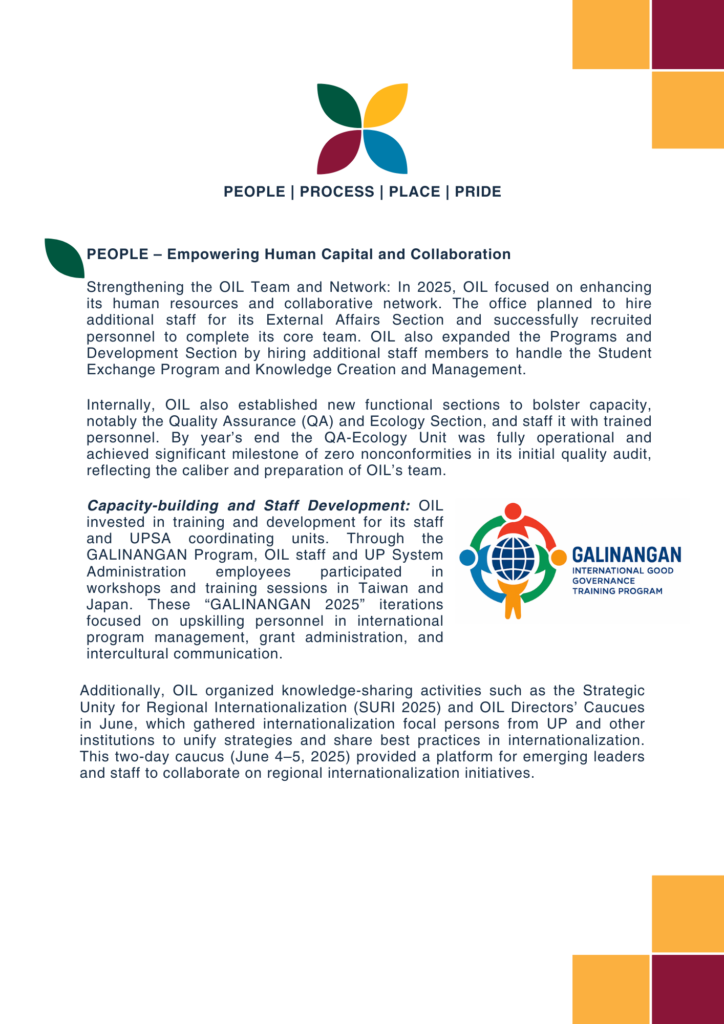
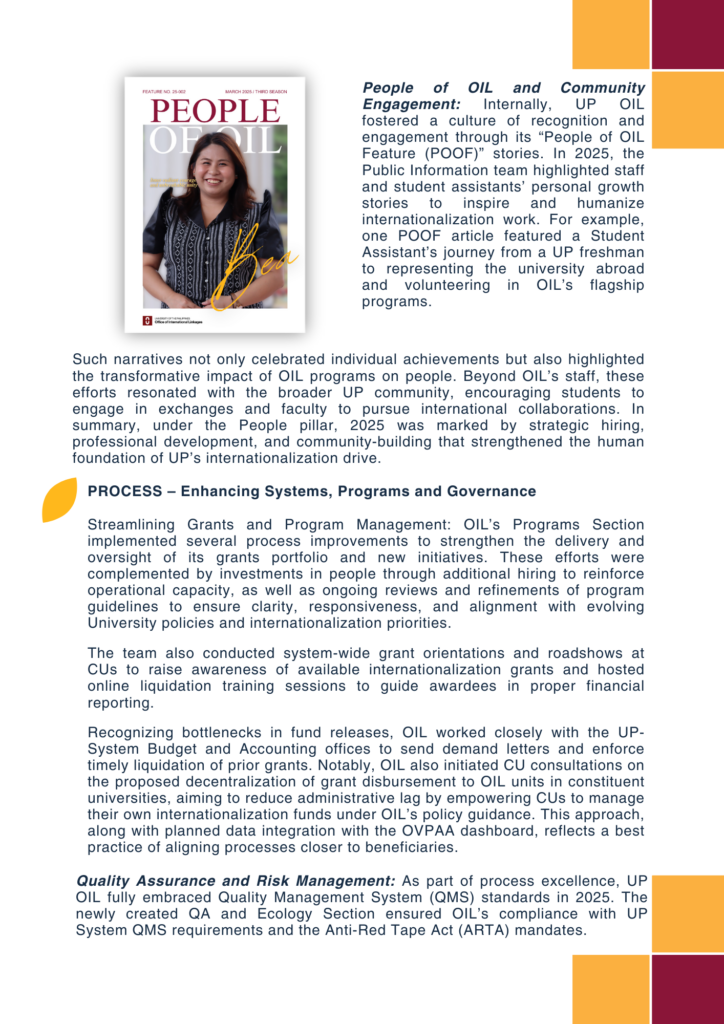
In 2025, UP OIL spearheaded internationalization programs, expanded partnerships, and strengthened internal capacities, all in alignment with UP’s strategic internationalization goals and OIL’s mission of capacity-building in collaboration with UP’s constituent universities (CUs).
Major initiatives such as UP HIRAYA, UP VINTA, GALINANGAN Good Governance Training Program, and SURI advanced OIL’s objectives, alongside robust efforts in organizational development, digital transformation, and quality assurance.
UP HIRAYA
GALINANGAN
UP VINTA
SURI 2025
PEOPLE – Empowering Human Capital and Collaboration
Strengthening the OIL Team and Network
In 2025, OIL focused on enhancing its human resources and collaborative network. The office planned to hire additional staff for its External Affairs Section and successfully recruited personnel to complete its core team. OIL also expanded the Programs and Development Section by hiring additional staff members to handle the Student Exchange Program and Knowledge Creation and Management.
Internally, OIL also established new functional sections to bolster capacity, notably the Quality Assurance (QA) and Ecology Section, and staffed it with trained personnel. By year’s end, the QA-Ecology Unit was fully operational and achieved the significant milestone of zero nonconformities in its initial quality audit, reflecting the caliber and preparation of OIL’s team.
Capacity-Building and Staff Development
OIL invested in training and development for its staff and UPSA coordinating units. Through the GALINANGAN Program, OIL staff and UP System Administration employees participated in workshops and training sessions in Taiwan and Japan. These “GALINANGAN 2025” iterations focused on upskilling personnel in international program management, grant administration, and intercultural communication.
Additionally, OIL organized knowledge-sharing activities such as the Strategic Unity for Regional Internationalization (SURI 2025) and OIL Directors’ Caucus in June, which gathered internationalization focal persons from UP and other institutions to unify strategies and share best practices in internationalization. This two-day caucus (June 4–5, 2025) provided a platform for emerging leaders and staff to collaborate on regional internationalization initiatives.
People of OIL and Community Engagement
Internally, UP OIL fostered a culture of recognition and engagement through its “People of OIL Feature (POOF)” stories. In 2025, the Public Information team highlighted staff and student assistants’ personal growth stories to inspire and humanize internationalization work.
For example, one POOF article featured a Student Assistant’s journey from a UP freshman to representing the university abroad and volunteering in OIL’s flagship programs.
Such narratives not only celebrated individual achievements but also highlighted the transformative impact of OIL programs on people. Beyond OIL’s staff, these efforts resonated with the broader UP community, encouraging students to engage in exchanges and faculty to pursue international collaborations.
In summary, under the People pillar, 2025 was marked by strategic hiring, professional development, and community-building that strengthened the human foundation of UP’s internationalization drive.
PROCESS – Enhancing Systems, Programs, and Governance
Streamlining Grants and Program Management
OIL’s Programs Section implemented several process improvements to strengthen the delivery and oversight of its grants portfolio and new initiatives. These efforts were complemented by investments in people through additional hiring to reinforce operational capacity, as well as ongoing reviews and refinements of program guidelines to ensure clarity, responsiveness, and alignment with evolving University policies and internationalization priorities.
The team also conducted system-wide grant orientations and roadshows at CUs to raise awareness of available internationalization grants and hosted online liquidation training sessions to guide awardees in proper financial reporting.
Recognizing bottlenecks in fund releases, OIL worked closely with the UP-System Budget and Accounting offices to send demand letters and enforce timely liquidation of prior grants.
Notably, OIL also initiated CU consultations on the proposed decentralization of grant disbursement to OIL units in constituent universities, aiming to reduce administrative lag by empowering CUs to manage their own internationalization funds under OIL’s policy guidance. This approach, along with planned data integration with the OVPAA dashboard, reflects a best practice of aligning processes closer to beneficiaries.
Quality Assurance and Risk Management
As part of process excellence, UP OIL fully embraced Quality Management System (QMS) standards in 2025. The newly created QA and Ecology Section ensured OIL’s compliance with UP System QMS requirements and the Anti-Red Tape Act (ARTA) mandates.
Through periodic audit reports and ecology initiatives, OIL institutionalized a culture of continuous improvement. Key process improvements identified include eliminating manual document routing (shifting to digital), consolidating multiple data repositories into one database for all programs, and introducing automated reminders for deadlines.
By year’s end, many of these enhancements were underway, positioning OIL for more efficient operations in 2026.
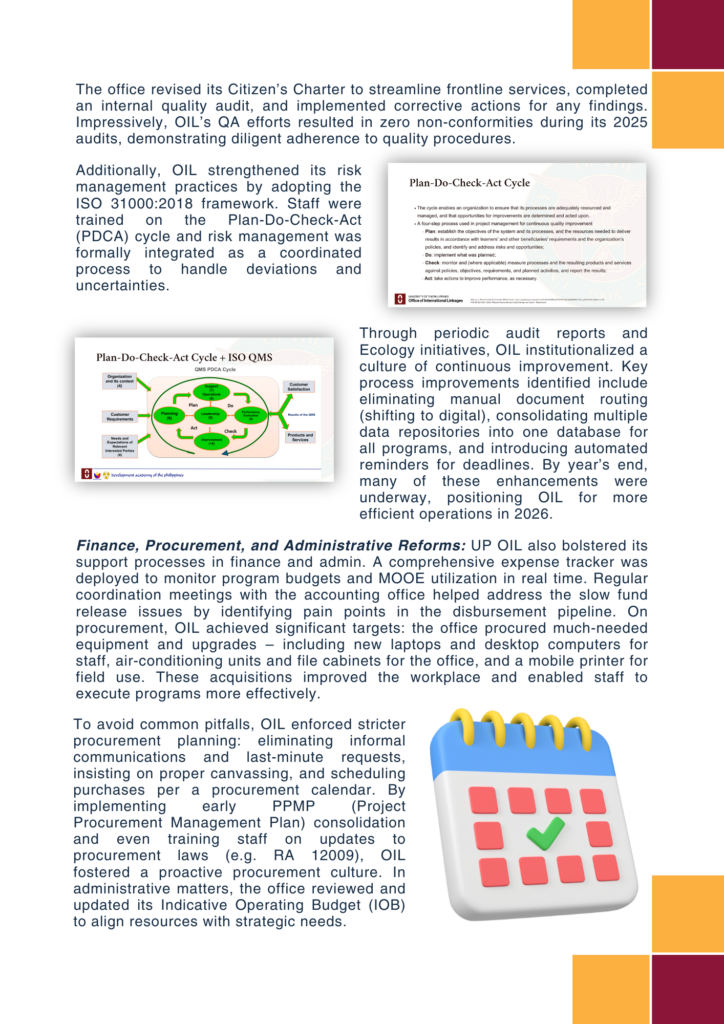
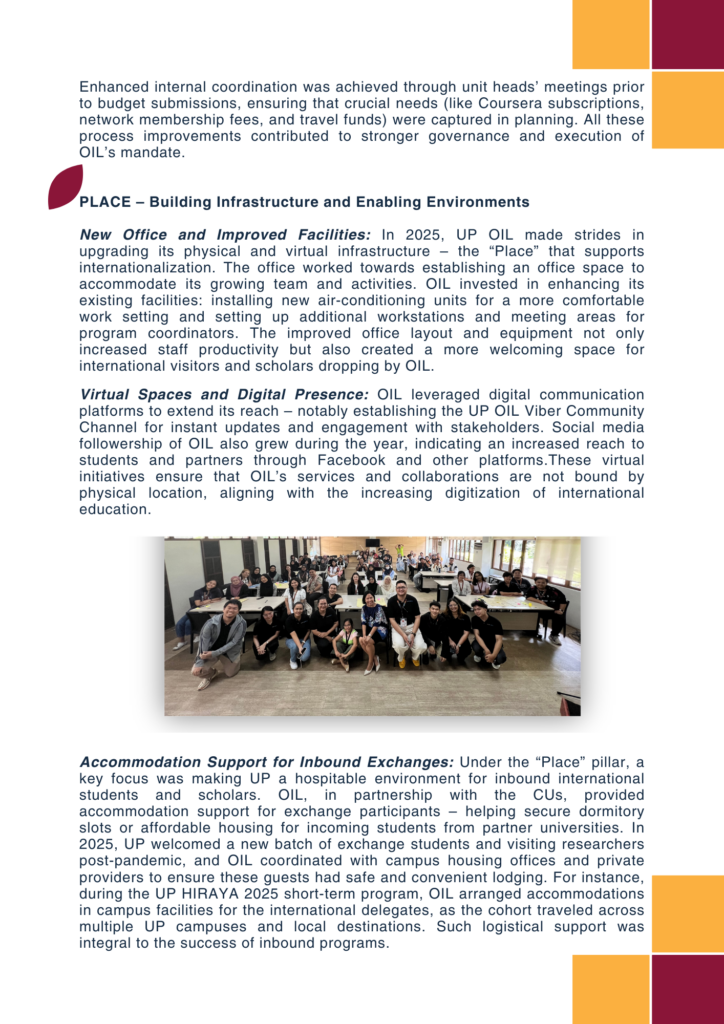
Additionally, OIL strengthened its risk management practices by adopting the ISO 31000:2018 framework. Staff were trained on the Plan-Do-Check-Act (PDCA) cycle, and risk management was formally integrated as a coordinated process to handle deviations and uncertainties.
The office revised its Citizen’s Charter to streamline frontline services, completed an internal quality audit, and implemented corrective actions for any findings. Impressively, OIL’s QA efforts resulted in zero non-conformities during its 2025 audits, demonstrating diligent adherence to quality procedures.
Finance, Procurement, and Administrative Reforms
UP OIL also bolstered its support processes in finance and administration. A comprehensive expense tracker was deployed to monitor program budgets and MOOE utilization in real time. Regular coordination meetings with the accounting office helped address slow fund release issues by identifying pain points in the disbursement pipeline.
On procurement, OIL achieved significant targets: the office procured much-needed equipment and upgrades, including new laptops and desktop computers for staff, air-conditioning units and file cabinets for the office, and a mobile printer for field use. These acquisitions improved the workplace and enabled staff to execute programs more effectively.
To avoid common pitfalls, OIL enforced stricter procurement planning: eliminating informal communications and last-minute requests, insisting on proper canvassing, and scheduling purchases per a procurement calendar.
By implementing early Project Procurement Management Plan (PPMP) consolidation and training staff on updates to procurement laws such as Republic Act No. 12009, OIL fostered a proactive procurement culture.
In administrative matters, the office reviewed and updated its Indicative Operating Budget (IOB) to align resources with strategic needs. Enhanced internal coordination was achieved through unit heads’ meetings prior to budget submissions, ensuring that crucial needs such as Coursera subscriptions, network membership fees, and travel funds were captured in planning.
All these process improvements contributed to stronger governance and execution of OIL’s mandate.
PLACE – Building Infrastructure and Enabling Environments
New Office and Improved Facilities
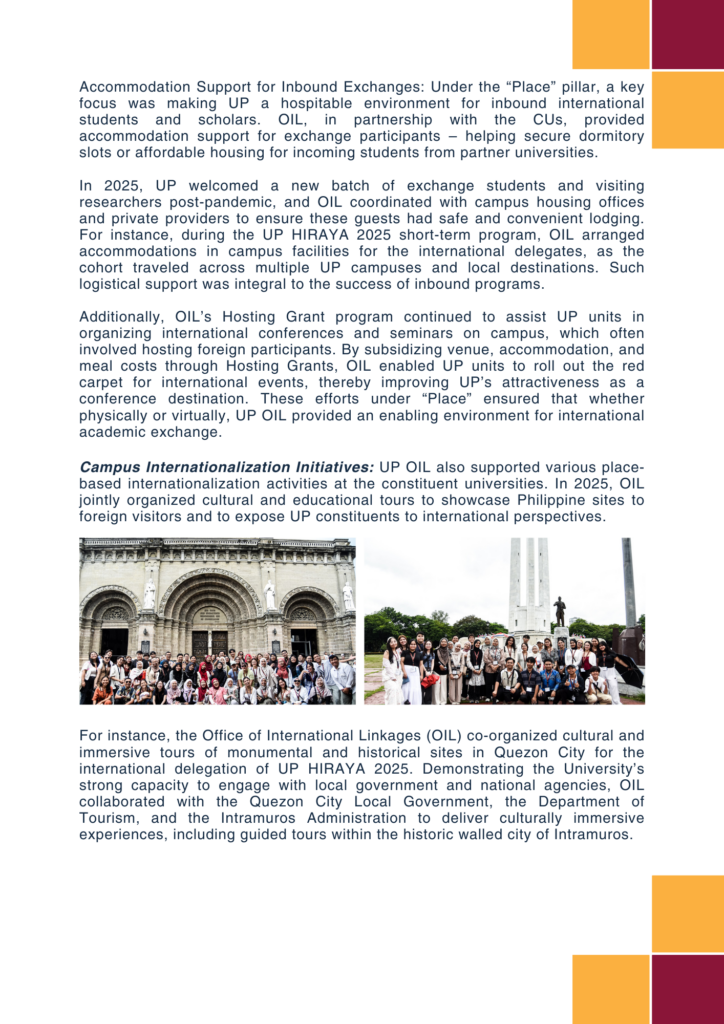
In 2025, UP OIL made strides in upgrading its physical and virtual infrastructure—the “Place” that supports internationalization. The office worked towards establishing an office space to accommodate its growing team and activities.
OIL invested in enhancing its existing facilities by installing new air-conditioning units for a more comfortable work setting and setting up additional workstations and meeting areas for program coordinators.
The improved office layout and equipment not only increased staff productivity but also created a more welcoming space for international visitors and scholars.
Virtual Spaces and Digital Presence
OIL leveraged digital communication platforms to extend its reach, notably establishing the UP OIL Viber Community Channel for instant updates and engagement with stakeholders.
Social media followership of OIL also grew during the year, indicating increased reach to students and partners through Facebook and other platforms. These virtual initiatives ensure that OIL’s services and collaborations are not bound by physical location, aligning with the increasing digitization of international education.
Accommodation Support for Inbound Exchanges
Under the Place pillar, a key focus was making UP a hospitable environment for inbound international students and scholars. OIL, in partnership with the CUs, provided accommodation support for exchange participants, helping secure dormitory slots or affordable housing for incoming students from partner universities.
In 2025, UP welcomed a new batch of exchange students and visiting researchers post-pandemic. OIL coordinated with campus housing offices and private providers to ensure these guests had safe and convenient lodging.
For instance, during the UP HIRAYA 2025 short-term program, OIL arranged accommodations in campus facilities for international delegates as the cohort traveled across multiple UP campuses and local destinations. Such logistical support was integral to the success of inbound programs.
Additionally, OIL’s Hosting Grant Program continued to assist UP units in organizing international conferences and seminars on campus. By subsidizing venue, accommodation, and meal costs through Hosting Grants, OIL enabled UP units to host foreign participants and improve UP’s attractiveness as a conference destination.
Campus Internationalization Initiatives
UP OIL supported various place-based internationalization activities at the constituent universities. In 2025, OIL jointly organized cultural and educational tours to showcase Philippine sites to foreign visitors and expose UP constituents to international perspectives.
For example, OIL co-organized cultural and immersive tours of monumental and historical sites in Quezon City for the international delegation of UP HIRAYA 2025.
Collaborating with the Quezon City Local Government, the Department of Tourism, and the Intramuros Administration, OIL delivered culturally immersive experiences, including guided tours within the historic walled city of Intramuros.
PRIDE – Elevating International Reputation and Partnerships
Under the Pride pillar, UP OIL significantly enhanced UP’s international profile and reputation in 2025. These efforts centered on flagship programs, global partnerships, and active participation in international networks.
UP HIRAYA 2025 – Showcasing UP to the World
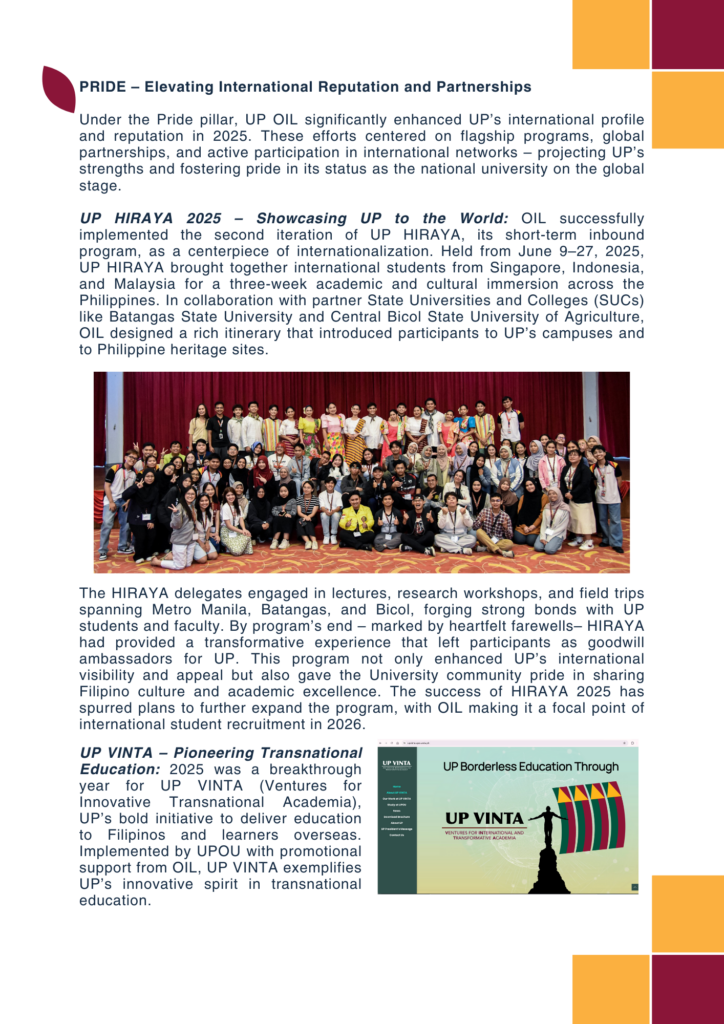
OIL successfully implemented the second iteration of UP HIRAYA, its short-term inbound program, held from June 9–27, 2025.
UP HIRAYA brought together international students from Singapore, Indonesia, and Malaysia for a three-week academic and cultural immersion across the Philippines.
In collaboration with partner State Universities and Colleges such as Batangas State University and Central Bicol State University of Agriculture, OIL designed a rich itinerary that introduced participants to UP campuses and Philippine heritage sites.
Delegates engaged in lectures, research workshops, and field trips across Metro Manila, Batangas, and Bicol. By program’s end, marked by heartfelt farewells, HIRAYA provided a transformative experience, turning participants into goodwill ambassadors for UP.
The success of HIRAYA 2025 has spurred plans to further expand the program, positioning it as a focal point of international student recruitment in 2026.
UP VINTA – Pioneering Transnational Education
2025 was a breakthrough year for UP VINTA (Ventures for Innovative Transnational Academia), UP’s initiative to deliver education to Filipinos and learners overseas.
Implemented by UPOU with promotional support from OIL, UP VINTA exemplifies UP’s innovative spirit in transnational education. Engagements in Japan, Taiwan, the UAE, and other locations underscored the program’s global reach.
By championing UP VINTA in international forums, OIL positioned UP as a provider of quality education beyond borders, enhancing UP’s reputation for inclusivity and innovation.
International Conferences and Global Engagements
UP OIL amplified UP’s leadership in international conferences and networks in 2025.
Association of Pacific Rim Universities (APRU):
UP was represented at the 29th APRU Annual Presidents’ Meeting in San Diego (June 22–24, 2025). UP was formally invited to host the APRU Annual Presidents’ Meeting in 2026.
ASEAN and AUN Networks:
UP OIL helped host the ASEAN University Network Rectors’ Meeting in the Philippines and participated in the 19th AIMS Annual Review Meeting in Putrajaya, Malaysia (November 4–6, 2025).
Global Education Fairs:
OIL led UP’s participation in the NUS Go Global Fair 2025 in Singapore, showcasing UP programs and generating new partnership leads.
International Partnership Building
OIL recorded 110 international events and engagements in 2025, a 23.6% increase from the previous year.
By year’s end, UP’s active international academic agreements totaled 562 across the system, with UP Diliman holding the largest share.
ERASMUS+ UNICATION 2025
The University of the Philippines (UP) strengthened its leadership in higher education internationalization in 2025 through its active engagement in the Erasmus+ UNICATION (Unify Communication by International Projects) initiative. Serving as a key project partner, UP contributed to capacity building, mentoring, and dissemination efforts that advanced international project management and communication across Philippine higher education institutions.
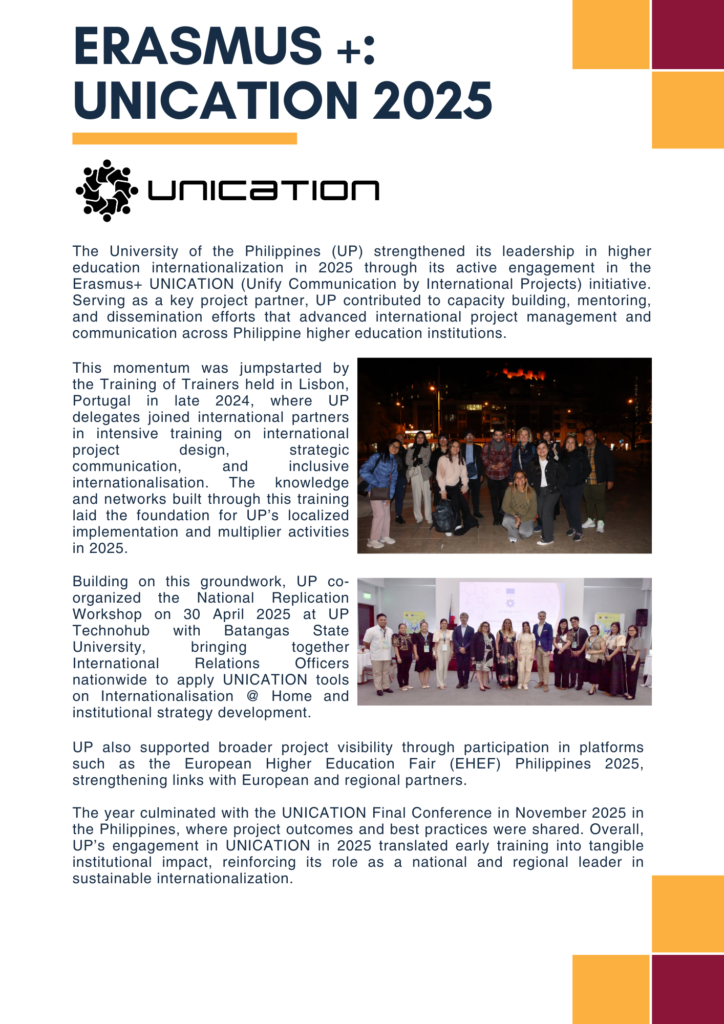
This momentum was jumpstarted by the Training of Trainers held in Lisbon, Portugal in late 2024, where UP delegates joined international partners in intensive training on international project design, strategic communication, and inclusive internationalisation. The knowledge and networks built through this training laid the foundation for UP’s localized implementation and multiplier activities in 2025.
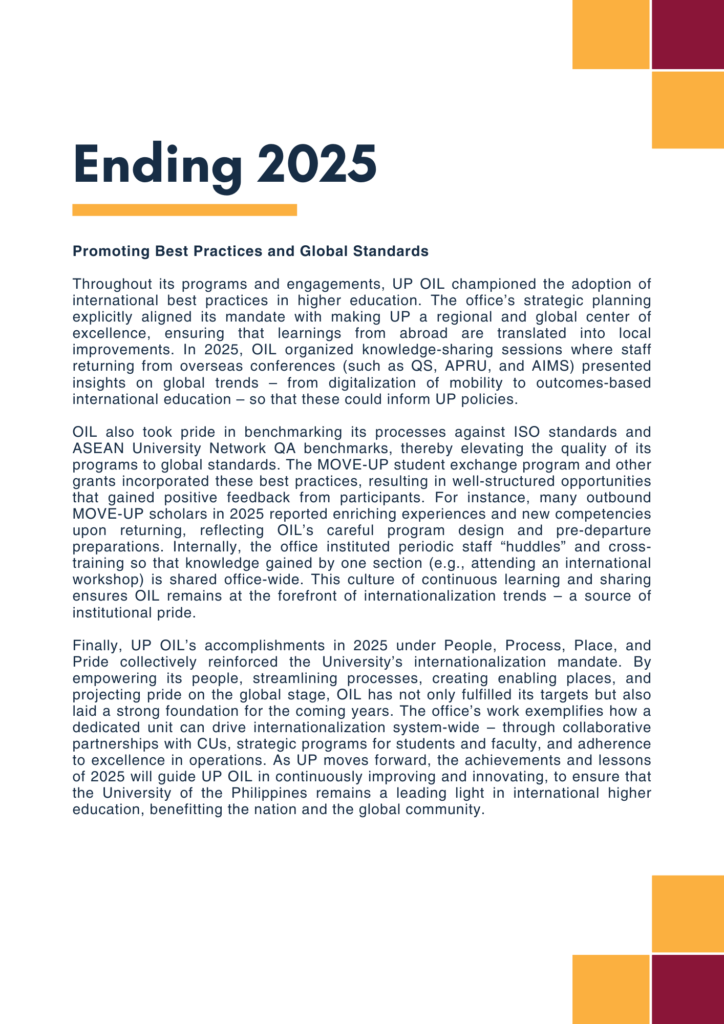
Building on this groundwork, UP co-organized the National Replication Workshop on 30 April 2025 at UP Technohub with Batangas State University, bringing together International Relations Officers nationwide to apply UNICATION tools on Internationalisation @ Home and institutional strategy development.
UP also supported broader project visibility through participation in platforms such as the European Higher Education Fair (EHEF) Philippines 2025, strengthening links with European and regional partners.
The year culminated with the UNICATION Final Conference in November 2025 in the Philippines, where project outcomes and best practices were shared. Overall, UP’s engagement in UNICATION in 2025 translated early training into tangible institutional impact, reinforcing its role as a national and regional leader in sustainable internationalization.
Ending 2025 – Promoting Best Practices and Global Standards
Throughout its programs and engagements, UP OIL championed the adoption of international best practices in higher education. The office’s strategic planning explicitly aligned its mandate with making UP a regional and global center of excellence, ensuring that learnings from abroad are translated into local improvements.
In 2025, OIL organized knowledge-sharing sessions where staff returning from overseas conferences such as QS, APRU, and AIMS presented insights on global trends — from digitalization of mobility to outcomes-based international education — so that these could inform UP policies.
OIL also took pride in benchmarking its processes against ISO standards and ASEAN University Network quality assurance benchmarks, thereby elevating the quality of its programs to global standards. The MOVE-UP student exchange program and other grants incorporated these best practices, resulting in well-structured opportunities that gained positive feedback from participants.
For instance, many outbound MOVE-UP scholars in 2025 reported enriching experiences and new competencies upon returning, reflecting OIL’s careful program design and pre-departure preparations.
Internally, the office instituted periodic staff “huddles” and cross-training so that knowledge gained by one section, such as attending an international workshop, is shared office-wide. This culture of continuous learning and sharing ensures OIL remains at the forefront of internationalization trends and serves as a source of institutional pride.
Finally, UP OIL’s accomplishments in 2025 under People, Process, Place, and Pride collectively reinforced the University’s internationalization mandate. By empowering its people, streamlining processes, creating enabling places, and projecting pride on the global stage, OIL has not only fulfilled its targets but also laid a strong foundation for the coming years.
The office’s work exemplifies how a dedicated unit can drive internationalization system-wide through collaborative partnerships with constituent universities, strategic programs for students and faculty, and adherence to excellence in operations.
As UP moves forward, the achievements and lessons of 2025 will guide UP OIL in continuously improving and innovating, to ensure that the University of the Philippines remains a leading light in international higher education, benefitting the nation and the global community.