
On 7 November 2026, the University of the Philippines (UP) Office of International Linkages (OIL) held SparkRegen Philippines Activation at the UP School of Statistics Auditorium in UP Diliman. Organized with co-organizers YRegenLab and the National University of Singapore College, the event gathered students from UP Diliman, UP Manila, and UP Open University for an afternoon of talks and dialogue on regeneration and sustainable development in the Philippine context.
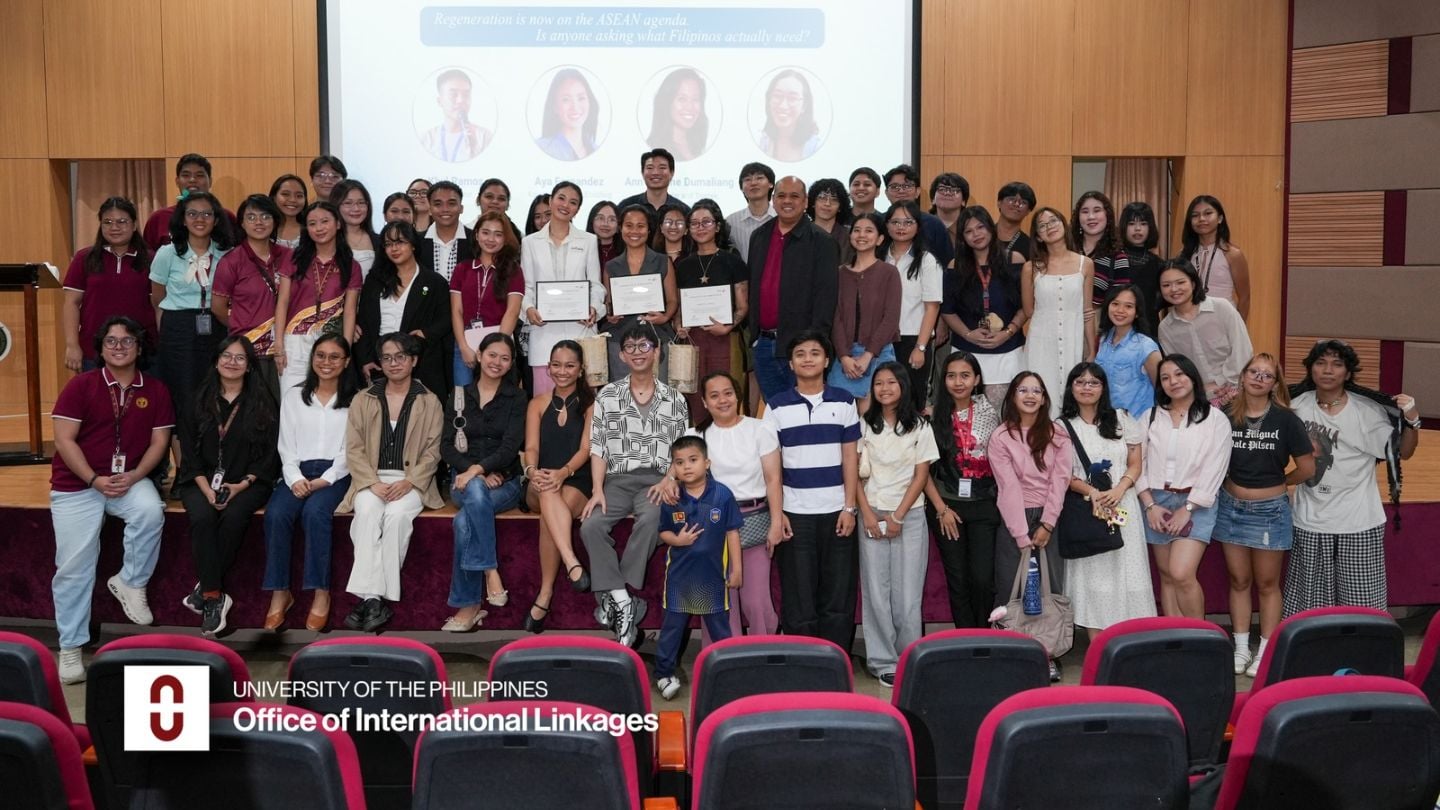
The activation was guided by one question: The Philippines is still working towards sustainability. So what could regeneration look like? More than a discussion of problems, the program invited students to imagine a regenerative future for the country, and to ask who gets to shape it. It also gave UP students a way into regional conversations, as the dialogue will feed into the Regen Asia Summit (RAS) 2027 in Singapore.
The afternoon began with Salo-salo at Kuwentuhan, a shared lunch where participants mingled before the program started. This was followed by Panimula, an introduction to regeneration and RAS, the region’s first youth-driven summit on regeneration. YRegenLab, the youth-led initiative behind the activation, was established by the pioneer International Student Executive Committee of RAS 2025 to sustain the momentum of that summit.
The event’s moderator, Khyl Ramos started the program with a thought-provoking question, “Who gets to define a Filipino regenerative future?” Regeneration, the framing stressed, must consider not only what is restored, but how land and resources are used. It must be people-centered, so that communities have a say in their future and Filipinos no longer need to leave the country to support their families. The pressures facing the country today were also highlighted: disasters such as floods and typhoons, rising costs and poverty among farmers and fisherfolk, and an environment under strain from mining, fossil fuels, and deforestation, in a country known as one of the deadliest for environmental defenders.
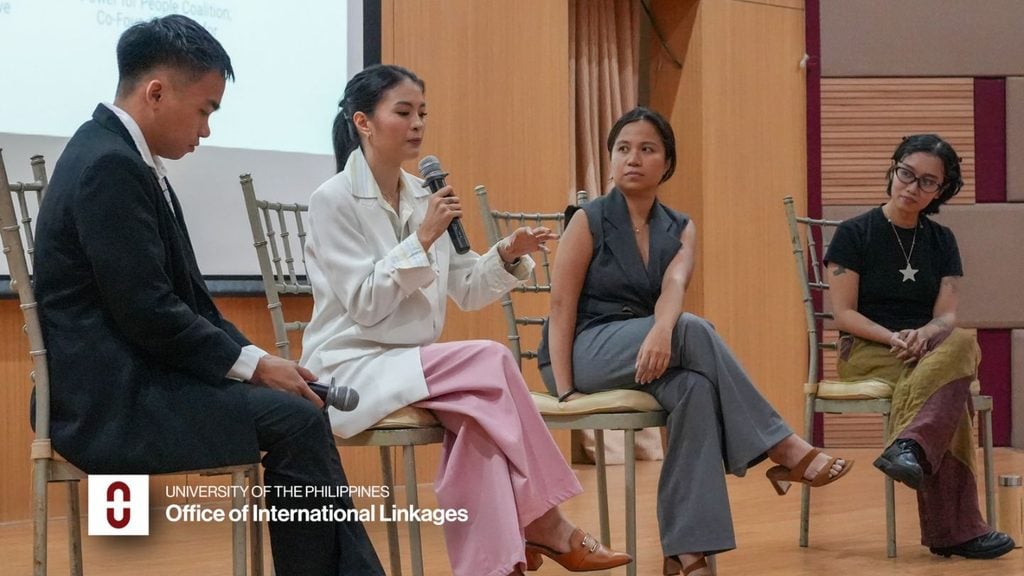
Three speakers then shared how regeneration looks in their own fields.
Aya Fernandez, Founder of EcoUling by Project Lily spoke on economy and development. EcoUling is a social enterprise that works with local communities to turn coconut waste into eco-friendly charcoal briquettes, now a top sustainable choice for grilling among chefs and restaurants in the country. She argued that destruction has become the default, so doing the right thing looks extraordinary. Regeneration, she said, should become the norm. Sustainability is not a trade-off, and regeneration pays off more. She also reminded participants not to be foreigners in their own country; one cannot fight for what they cannot appreciate.
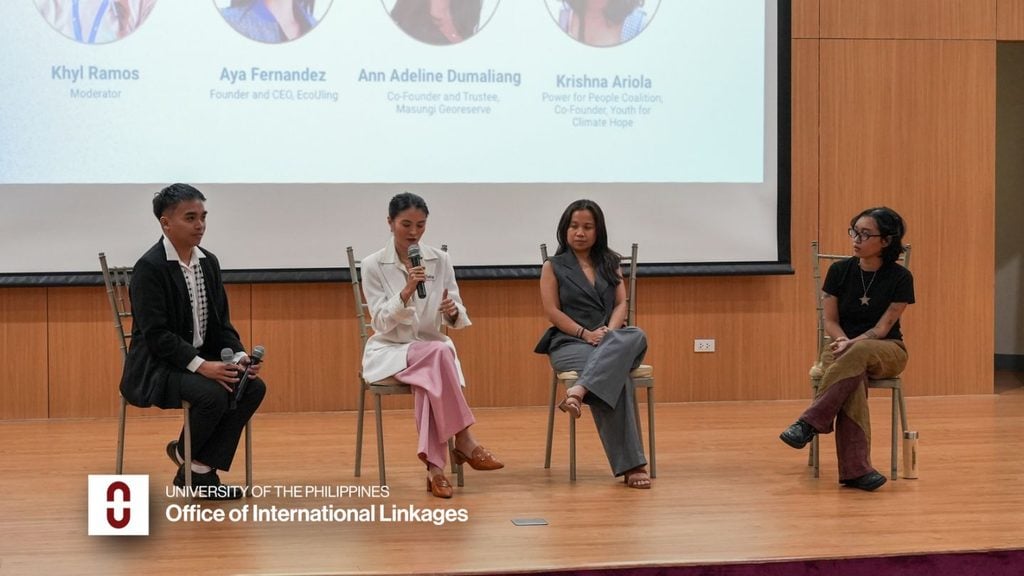
Ann Dumaliang, Co-Founder of Masungi GeoReserve, spoke on ecological restoration and stewardship. She shared how years of reforestation have turned Masungi into a home for around 800 species of life, and how the effort began with learning the land itself, then its relationship with culture and the economy. The Masungi Geopark Project has defended the area from quarrying and illegal encroachment.
Krishna Ariola, Co-Founder of Youth for Climate Hope spoke on climate justice and energy transition. She noted that the energy sector is the largest source of global greenhouse gas emissions, and that phasing out fossil fuels is a climate imperative for a country among the most vulnerable to disasters. Years of resistance from multi-sectoral and intergenerational groups have led to key gains, such as the moratorium on new coal-fired power plants. She laid out a path of phasing out coal by 2035 and fossil gas by 2050, powered by renewable energy, and said that a 1.5°C-aligned future is possible. For her, the shift must be more than technological. “It should not just be a transition but a transformation,” she said, one that changes systems that have failed the most vulnerable.
A joint panel discussion and open forum followed, giving students the chance to ask questions directly to the speakers. The program closed with a commemorative photo, the presentation of certificates, and closing remarks.
For UP students, spaces like this show that regeneration is not an abstract idea. It is already being done by Filipinos, in enterprises, reserves, and campaigns across the country. At the same time, partnerships with youth-led and international organizations such as YRegenLab and NUS College help bring Philippine voices into a wider conversation on what regeneration could mean for ASEAN. Many global discussions can feel distant for students who have never taken part in one, and activations like this help bridge the gap between knowing that these conversations exist and knowing how to join them.
Photos by Arianna Shay S. Zafra and Angelo P. Cruz Jr., Members of the Volunteer Corps, Office of International Linkages
Article by CJ Ignas, Student Assistant, Office of International Linkages