
Five University of the Philippines students from four Constituent Universities are part of three projects selected among the Top 15 out of more than 300 initial project ideations at the National University of Singapore (NUS) 2026 Asian Undergraduate Symposium (AUS). Each project received a SGD 5,000 NUS Seed Grant for Implementation, providing the teams with resources to turn their ideas developed during the symposium into initiatives with concrete community impact.
The UP students—Claire Margarette Han of UP Diliman; Xia Salazar and Leanne Clarisse Losañes of UP Manila; Eva Cerise Lopez of UP Visayas; and Randolf Montibon of UP Tacloban—worked alongside students from universities in the Philippines and across Asia on projects addressing children’s emotional resilience, circular STEM education, and food security and livelihood development.
E-MOTION: Helping Children Build Emotional Resilience
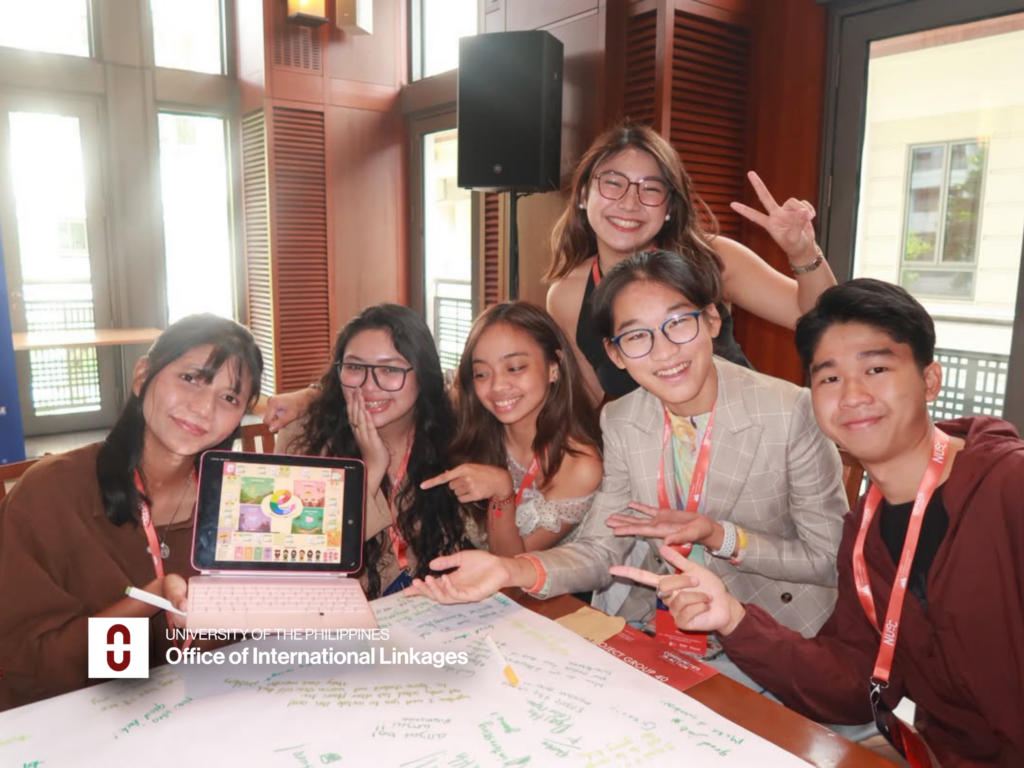
Claire Margarette Han of UP Diliman served as Project Team Leader of E-MOTION, a social-emotional toolkit designed to teach children emotional resilience through hands-on play while equipping them with practical tools to identify, understand, and cope with their feelings.
With its SGD 5,000 seed grant, the team will conduct workshops for children in the National Capital Region.
Han leads an eight-member team composed of students from different universities and countries: Paula Lucero and Patricia Ramos of Ateneo de Manila University; Josephine Bitancor of the University of Santo Tomas; Tomoki Higashide of the University of Tokyo; Tran Quan Hy of Fulbright University Vietnam; Xiyue Ren of Peking University; and Tyasayu of Universitas Gadjah Mada.
The team’s composition reflects the international and interdisciplinary collaboration fostered by the NUS symposium, bringing together perspectives from across Asia to develop an intervention with direct application among Filipino children.
RuZzle: Turning Plastic Waste into Educational Tools
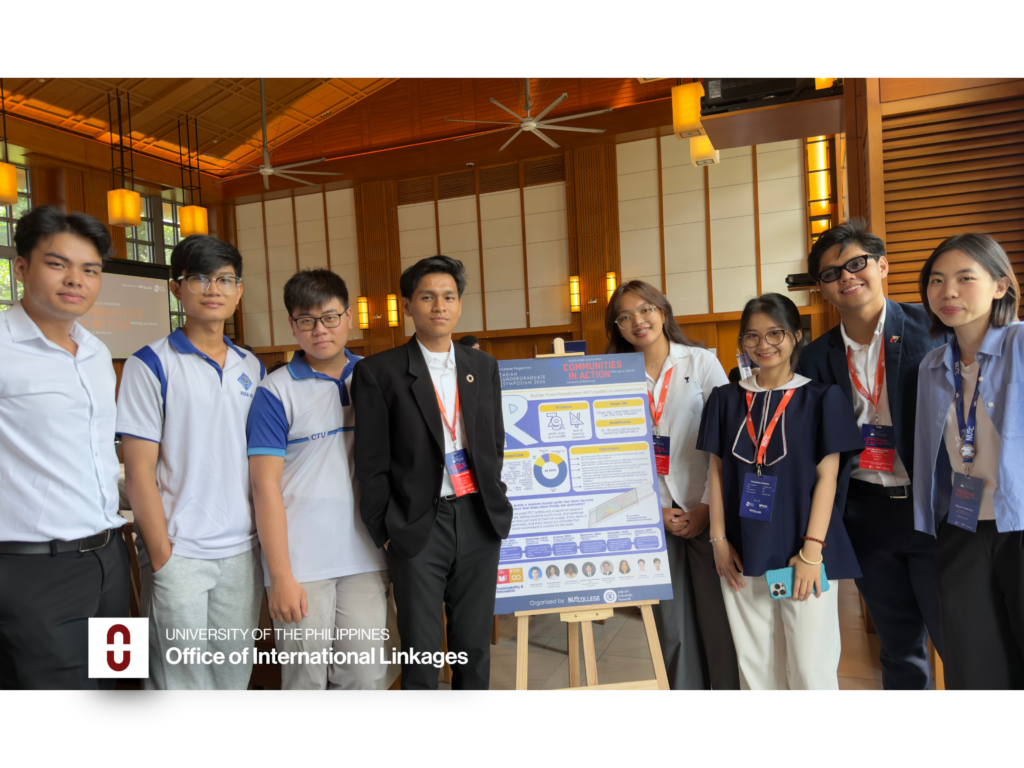
Xia Salazar of UP Manila is part of the team behind RuZzle, a circular STEM education project that transforms locally collected PET bottles into durable, reusable learning tools through 3D printing.
With its seed grant, the team will pilot a modular ruler incorporating seven Tangram pieces to strengthen students’ spatial reasoning, creativity, and problem-solving skills, while demonstrating how waste can be transformed into valuable educational resources.
Through RuZzle, Salazar and her teammates aim to bring environmental sustainability and STEM education together through an accessible, hands-on learning tool.
SIKULO: Supporting Fisherfolk Communities through Aquaponics
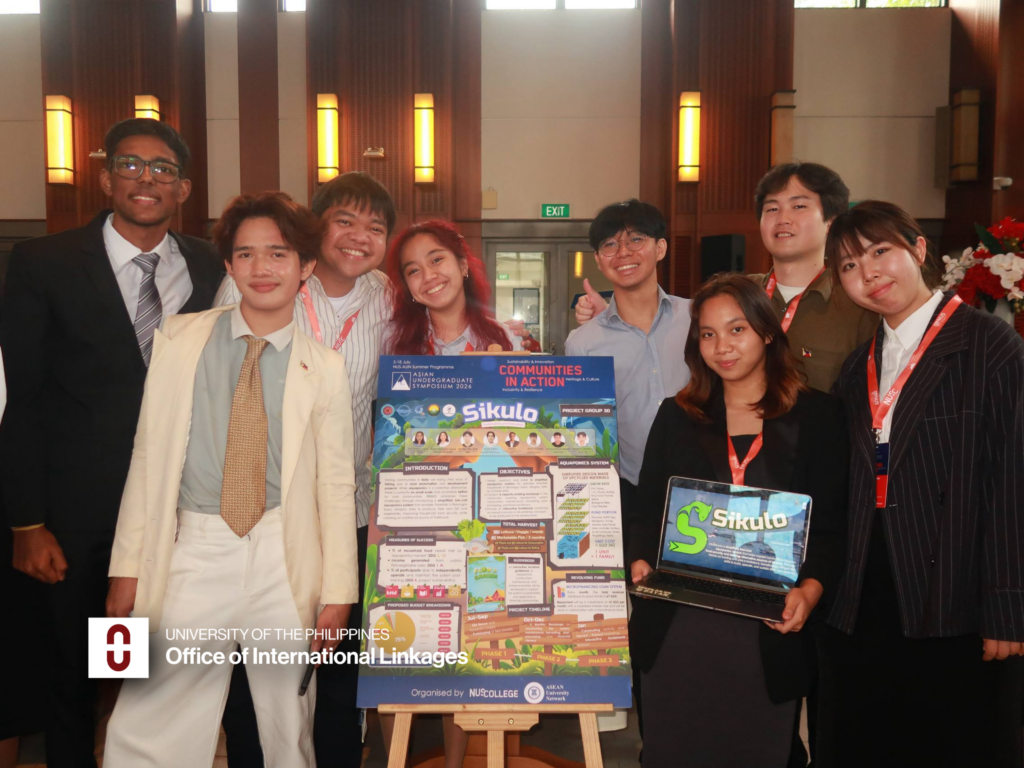
Eva Cerise Lopez of UP Visayas, Randolf Montibon of UP Tacloban, and Leanne Clarisse Losañes of UP Manila are part of the team behind SIKULO, with Lopez serving as Project Lead.
The project focuses on fisherfolk communities in Miagao, Iloilo, introducing an innovative aquaponics system that aims to strengthen food security while providing an alternative source of livelihood.
The team’s SGD 5,000 Seed Grant for Implementation will support the project’s six-month implementation and provide a foundation for potential long-term scaling. Alongside the aquaponics system, the team will conduct capacity-building workshops to equip community members with the knowledge and skills necessary to sustain the initiative beyond its initial implementation.
Through SIKULO, the team hopes to demonstrate how science, technology, and community-centered innovation can work together to address local challenges while creating sustainable and people-centered solutions.
A Diverse UP Presence in an International Student Platform
The three projects bring together UP students and teammates from universities across the Philippines and Asia. Beyond their individual projects, their participation reflects the breadth of UP student engagement across four Constituent Universities—UP Diliman, UP Manila, UP Visayas, and UP Tacloban.
The achievement is particularly significant given the competitiveness of the NUS program: the three projects were selected among the Top 15 from more than 300 initial project ideations developed through the symposium.
For the five UP students—Claire Margarette Han, Xia Salazar, Eva Cerise Lopez, Randolf Montibon, and Leanne Clarisse Losañes—the experience provided an opportunity to collaborate with peers from diverse cultural and academic backgrounds, exchange ideas, and develop solutions grounded in community needs.
The seed grants now enable the teams to move from ideation to implementation. From helping children develop emotional resilience and transforming plastic waste into educational tools to strengthening food security and livelihood opportunities for fisherfolk communities, the three projects demonstrate the potential of student-led international collaboration to translate ideas into meaningful action.
For the University of the Philippines, their achievement underscores the value of international engagement in developing students who can collaborate across borders, innovate in response to real-world challenges, and bring the benefits of their learning and partnerships back to Philippine communities.